






























































How Grain Structure Influences Bat Power and Sweet Spot

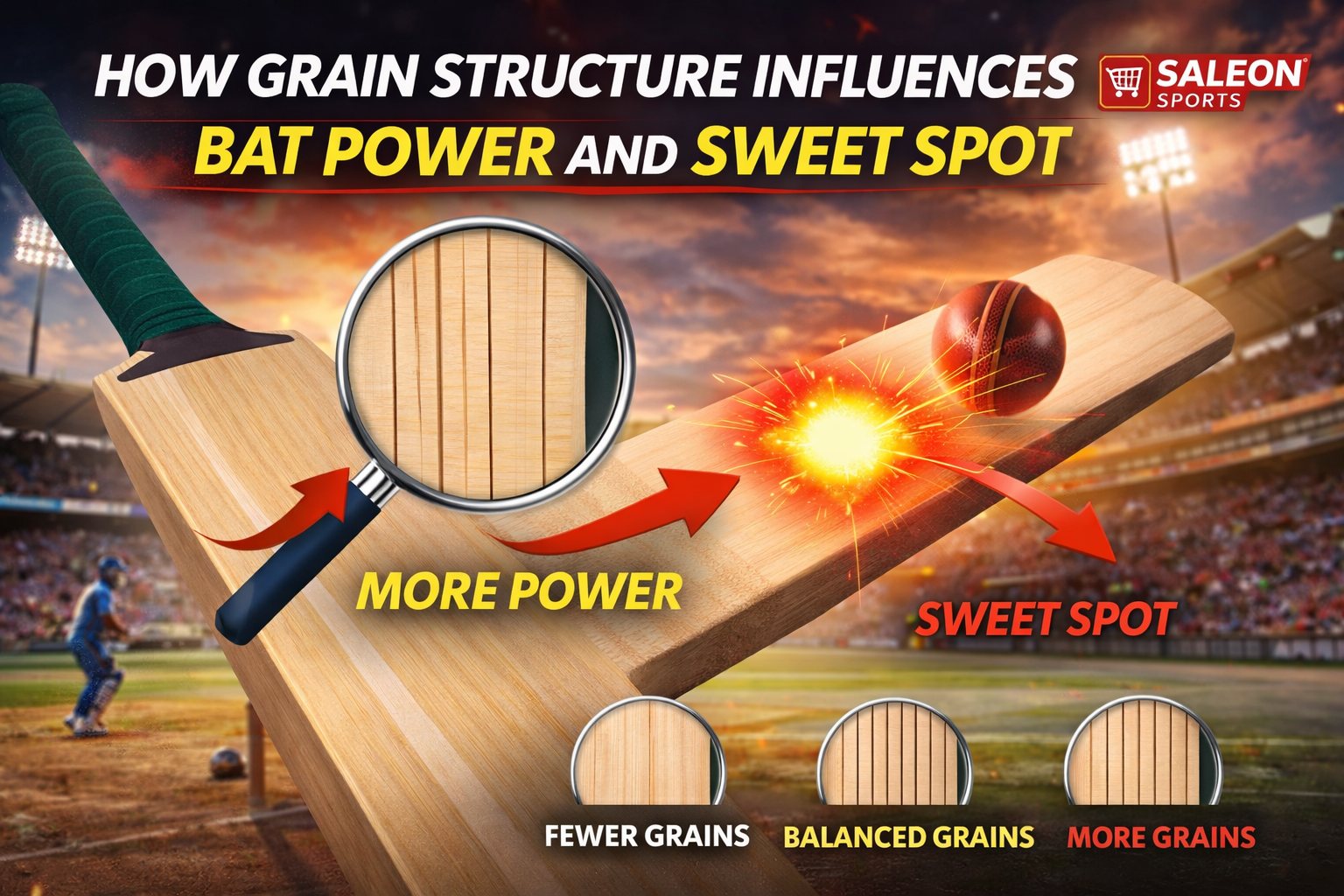
When choosing a cricket bat, most players look at the weight, shape, and design, but one important factor that often gets overlooked is the grain structure of the bat. The grains on a cricket bat are not just visual lines on the willow—they actually play a major role in determining bat power, performance, and sweet spot efficiency.
At SaleonSports, we regularly help cricketers understand how the grain structure of an English willow bat affects their game. Whether you are a beginner or a professional player, understanding grains can help you choose a bat that suits your playing style perfectly.
In this guide, we’ll explore:
- What grain structure means in cricket bats
- How grains influence power and performance
- The connection between grains and the sweet spot
- How many grains are ideal for different players
- Tips for selecting the right bat
Let’s get started.
What Are Grains in a Cricket Bat?
The grains on a cricket bat are the visible vertical lines on the face of the willow. These lines represent the growth rings of the willow tree from which the bat is made.
Each grain indicates one year of tree growth.
When the willow tree grows slowly, the grains appear closer together and finer. When the tree grows faster, the grains appear wider apart.
These grain patterns influence:
- Bat durability
- Bat responsiveness
- Power transfer when hitting the ball
- Sweet spot performance
That’s why professional players always inspect the grain pattern before choosing a bat.
Why Grain Structure Matters in Cricket Bats
The grain structure directly impacts how a bat behaves when the ball strikes the blade.
Key performance factors affected by grain structure include:
- Power generation
- Ball rebound
- Bat feel
- Durability
- Sweet spot performance
While the number of grains is important, grain quality and consistency are even more crucial.
Straight and evenly spaced grains usually indicate high-quality willow.
How Grain Structure Influences Bat Power
One of the biggest advantages of good grain structure is enhanced power transfer.
When a cricket ball hits the bat, the energy travels through the willow fibers. A well-structured grain pattern allows the bat to compress and release energy efficiently, creating a powerful shot.
Bats with Fewer Grains (4–6 Grains)
These bats usually come from younger willow trees.
Characteristics:
- Harder surface
- Extremely durable
- Takes longer to reach peak performance
- Ideal for beginners and club players
Although they may initially feel slightly harder, once properly knocked in, they can generate excellent power.
Bats with Medium Grains (6–8 Grains)
This is considered the perfect balance for most cricketers.
Benefits include:
- Strong durability
- Good power generation
- Excellent rebound
- Long-lasting performance
Many professional bats fall into this category because they offer both power and stability.
Bats with More Grains (9–12 Grains)
These bats come from mature willow trees that grow slowly.
Characteristics:
- Softer willow
- Quick performance
- Immediate power response
- Slightly less durable
These bats are often used by professional players who want maximum responsiveness.
How Grain Structure Affects the Sweet Spot
The sweet spot is the area on the bat blade where you get the maximum power and best feel when hitting the ball.
The grain structure affects how energy travels through the bat, which directly influences the sweet spot.
Even Grain Distribution
When grains are straight and evenly spaced:
- Energy spreads evenly across the blade
- The sweet spot feels more responsive
- Shots travel farther with less effort
This is why high-quality bats have clean and straight grains.
Uneven Grain Structure
If the grains are irregular or inconsistent:
- Power transfer may become uneven
- The sweet spot may feel smaller
- Shots may lack consistency
This doesn’t necessarily mean the bat is poor quality, but it may affect performance.
Sweet Spot Position and Grain Structure
Different bats have sweet spots located at different areas of the blade:
Low Sweet Spot
Ideal for slow or low pitches.
Common in subcontinent conditions.
Mid Sweet Spot
Balanced performance for all conditions.
Suitable for most players.
High Sweet Spot
Ideal for fast and bouncy pitches.
Preferred in countries like Australia and South Africa.
Grain structure supports these sweet spot positions by influencing how the bat flexes during impact.
Does More Grain Always Mean More Power?
This is a common myth in cricket.
Many players assume that more grains automatically mean a better bat, but that is not always true.
Bat performance depends on several factors, including:
- Willow quality
- Bat pressing
- Weight distribution
- Balance
- Bat craftsmanship
A well-made 6-grain bat can easily outperform a poorly made 12-grain bat.
That’s why it’s important to evaluate the entire bat, not just the grain count.
What Grain Count Is Ideal?
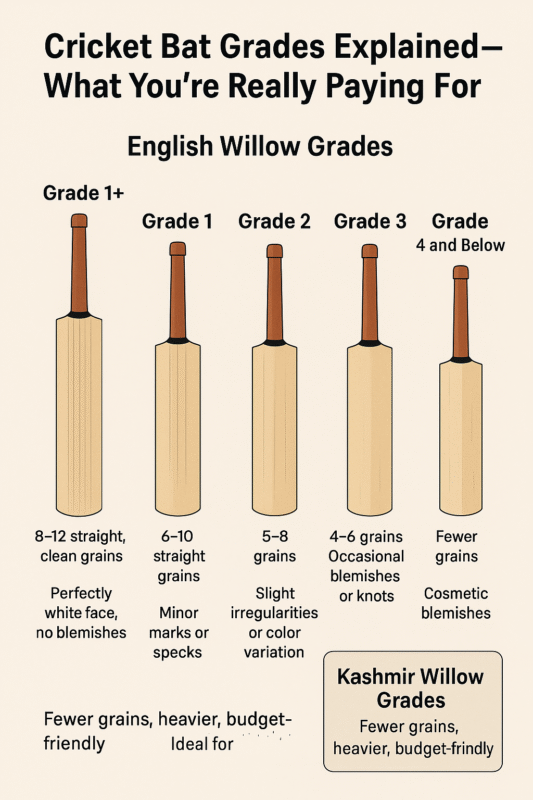
Most high-quality English willow bats have between 6 and 10 grains.
This range provides the best balance between:
- Power
- Durability
- Performance
Here is a simple guideline:
Beginner Players
5–7 grains
Intermediate Players
6–8 grains
Advanced Players
7–10 grains
Professional Players
8–12 grains
Choosing the right grain structure depends on how often you play and the type of cricket you play.
Tips for Choosing the Right Grain Structure
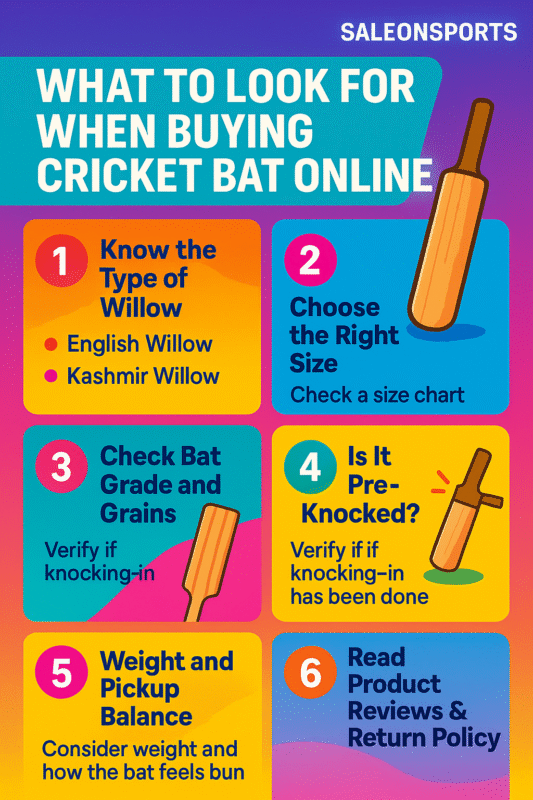
When buying a cricket bat, keep these tips in mind:
Look for straight grains
Avoid excessive blemishes across grains
Ensure proper knocking before use
Choose balanced weight and pickup
Consider the sweet spot location
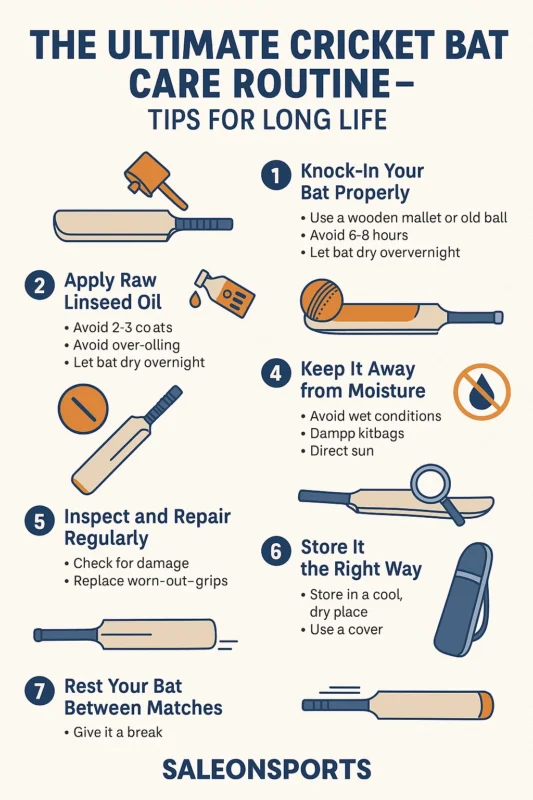
Also remember that proper bat maintenance plays a huge role in maintaining performance.
Regular oiling, knocking, and protection will help the grain structure remain strong and responsive.
Why Quality Willow Matters
At SaleonSports, we focus on sourcing high-quality willow to ensure that every bat delivers excellent performance.
A good willow bat should offer:
- Balanced grain structure
- Powerful sweet spot
- Strong durability
- Comfortable pickup
Whether you are playing competitive cricket or casual matches, the right bat can make a significant difference in your game.
Final Thoughts
Grain structure is one of the most important features of a cricket bat. It directly affects bat power, sweet spot size, and overall performance.
While many players focus only on the number of grains, the truth is that grain quality, willow strength, and bat craftsmanship matter much more.
The ideal cricket bat should have straight, even grains and a balanced sweet spot, allowing players to generate powerful shots with better control.
By understanding how grain structure influences bat performance, you can make a smarter choice and improve your game.
Shop Cricket Bats
Explore premium cricket bats and gear at: