












Different Types of Cricket Bats and Their Uses

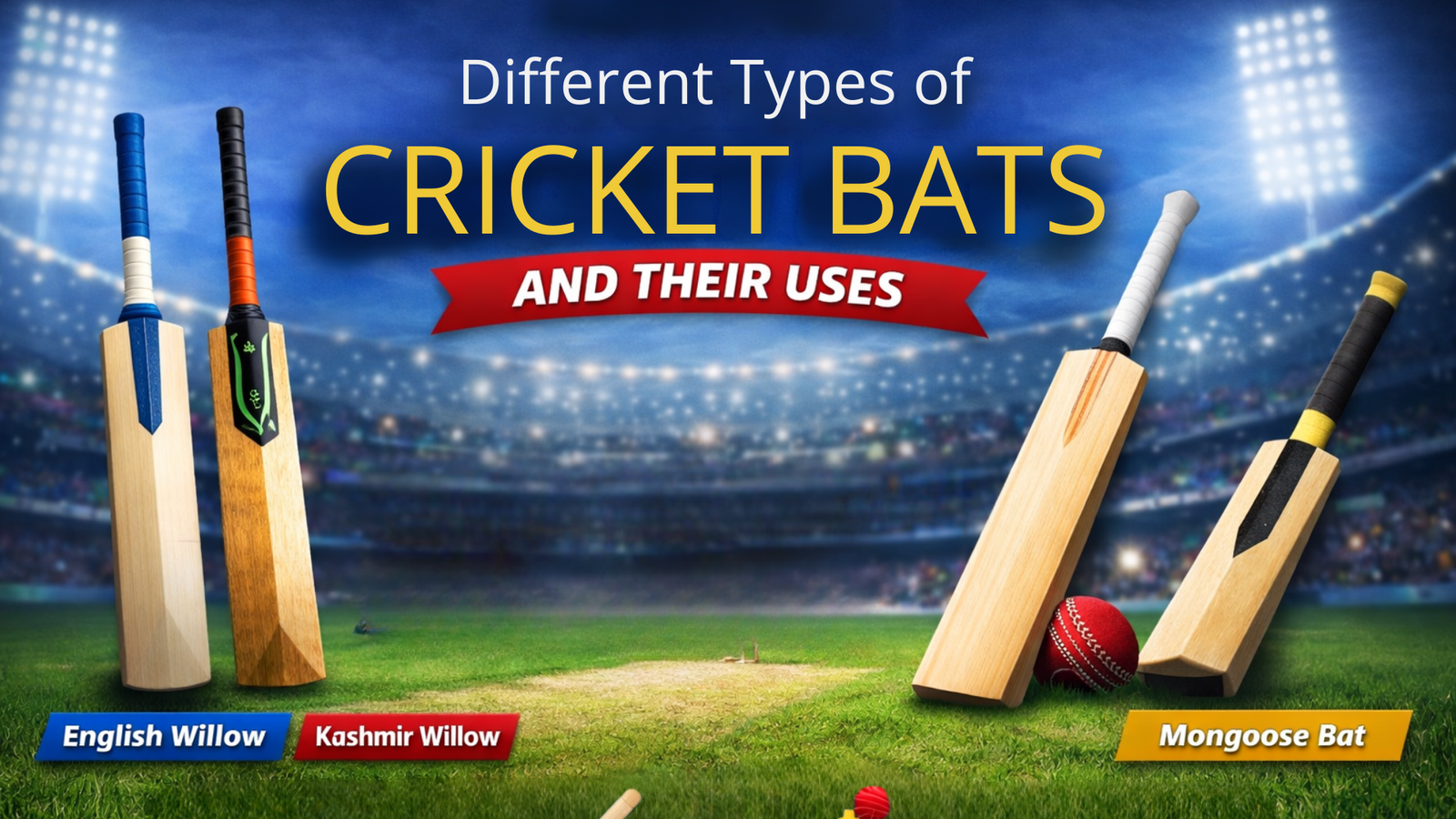
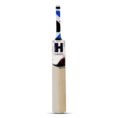
Cricket is not just a sport; it is an emotion for millions of fans and players across the world. From gully cricket to international stadiums, one thing remains constant — the cricket bat. The bat is the most important weapon in a batter’s hands, and choosing the right type can completely change performance on the field.
Whether you are a beginner, club-level player, or professional cricketer, understanding the different types of cricket bats and their uses is essential before making a purchase. In this detailed guide, we will break down everything you need to know — from willow types and bat profiles to handle variations and format-specific bats.
Let’s dive in.
1. Types of Cricket Bats Based on Willow
The willow used in making a cricket bat plays a huge role in its performance, durability, and price. There are mainly two types of willow used worldwide.
English Willow Cricket Bats
English willow is considered the premium choice for professional and serious cricketers. It is sourced from England and is known for its lightweight structure and superior performance.
Features:
- Soft and fibrous wood
- Better shock absorption
- Large sweet spot
- Excellent ping and rebound
Best For:
- Leather ball cricket
- Professional matches
- Advanced players
English willow bats generally have visible straight grains, which indicate quality and maturity of the wood. These bats require proper knocking-in before use but deliver outstanding power once prepared correctly.
Kashmir Willow Cricket Bats
Kashmir willow is grown in India and is slightly harder and denser than English willow. It is more affordable and durable, making it ideal for beginners.
Features:
- Heavier than English willow
- Darker appearance
- More durable in rough conditions
- Budget-friendly
Best For:
- Beginners
- Tennis ball cricket
- Practice sessions
If you are starting your cricket journey or playing casual matches, Kashmir willow is a practical and economical option.
2. Types of Cricket Bats Based on Playing Format
Different cricket formats require different batting styles. Manufacturers design bats accordingly.
T20 Cricket Bats
T20 cricket is fast-paced and aggressive. Players prefer bats that offer explosive power.
Characteristics:
- Thick edges
- Large sweet spot
- Slightly heavier profile
- Mid to low sweet spot
Use:
Perfect for power hitters who love playing big shots like sixes and boundaries.
ODI Cricket Bats
One Day cricket requires a balance between aggression and technique.
Characteristics:
- Balanced weight distribution
- Mid sweet spot
- Combination of control and power
Use:
Ideal for players who rotate strike and accelerate when required.
Test Match Cricket Bats
Test cricket demands patience, technique, and long innings.
Characteristics:
- Slightly lighter weight
- Better control
- High or mid sweet spot
- Balanced pickup
Use:
Best suited for defensive players and technically sound batters who focus on timing rather than power.
3. Types of Cricket Bats Based on Sweet Spot Position
The sweet spot is the area where the ball connects perfectly, giving maximum power with minimum vibration.
Low Sweet Spot Bats
- Sweet spot located near the toe
- Ideal for slow and low pitches
- Suitable for subcontinent conditions
Best For:
Front-foot players who play on low-bounce pitches.
Mid Sweet Spot Bats
- Sweet spot in the middle of the blade
- Versatile performance
- Suitable for all-round play
Best For:
Players who play both front-foot and back-foot shots.
High Sweet Spot Bats
- Sweet spot near the splice
- Perfect for bouncy pitches
Best For:
Back-foot players who play cuts and pulls frequently.
4. Types of Cricket Bats Based on Handle
The handle of a cricket bat affects comfort, control, and flexibility.
Short Handle (SH)
- Most common size
- Suitable for players between 5’5” to 6 feet
Use:
Ideal for most adult cricketers.
Long Handle (LH)
- Slightly longer than short handle
- Provides extra reach
Use:
Best for taller players above 6 feet.
Round Handle
- Allows flexible wrist movement
- Preferred by wristy players
Oval Handle
- Offers better grip alignment
- Reduces bat twisting
Professional players often choose handle type based on personal comfort and playing style.
5. Types of Cricket Bats Based on Blade Profile
Modern bats come in various profiles designed for specific batting styles.
Thick Edge Bats
- Massive edges
- Powerful hitting ability
- Slightly heavier
Use:
Perfect for aggressive batters and T20 format.
Lightweight Bats
- Easy pickup
- Better bat speed
- Enhanced control
Use:
Ideal for beginners and players who rely on timing.
Full Profile Bats
- Minimal concaving
- More wood behind sweet spot
Use:
Provides maximum power.
Concave Bats
- Scooped-out back
- Reduced weight
- Balanced pickup
Use:
Combination of power and control.
6. Types of Cricket Bats Based on Age Group
Kids Cricket Bats
- Lightweight
- Smaller size
- Designed for tennis ball cricket
Perfect for young players starting their cricket journey.
Junior Cricket Bats
- Slightly heavier than kids bats
- Available in size 4, 5, 6, and Harrow
Ideal for school-level cricket.
Adult Cricket Bats
- Full size (SH or LH)
- Professional-grade options available
Used in club, domestic, and professional cricket.
7. Tennis Ball vs Leather Ball Cricket Bats
Tennis Ball Cricket Bats
- Made from Kashmir willow or hard wood
- Durable against lighter balls
- Often heavier
Best for street cricket and casual matches.
Leather Ball Cricket Bats
- Made from English willow
- Require knocking
- Designed for hard-ball impact
Best for competitive and professional cricket.
8. Mongoose and Specialized Cricket Bats
In recent years, unique bat designs have entered the market.
Mongoose Bats
- Short blade
- Long handle
- Larger sweet spot
Designed mainly for T20 cricket to generate extra bat speed.
Customized Cricket Bats
Many brands now offer customized bats based on:
- Weight preference
- Sweet spot placement
- Handle shape
- Grip thickness
Customization helps players get maximum comfort and performance.
How to Choose the Right Cricket Bat for Your Game
When selecting a cricket bat, consider the following:
- Playing Level – Beginner, club, or professional
- Budget – English willow costs more than Kashmir willow
- Pitch Conditions – Low or bouncy
- Playing Style – Defensive or aggressive
- Bat Weight – Comfortable pickup is crucial
Always hold the bat and check pickup balance rather than just looking at its weight.
Why Choosing the Right Cricket Bat Matters
Using the correct type of bat:
- Improves timing
- Reduces injury risk
- Enhances power
- Boosts confidence
- Improves overall performance
A well-selected bat feels like an extension of your arm and allows you to focus completely on your game.
Conclusion
Cricket bats come in various types based on willow, format, sweet spot, handle, profile, and player age. Each type serves a specific purpose and suits different playing styles.
If you are a beginner, start with a Kashmir willow bat for practice. If you are serious about competitive cricket, invest in a high-quality English willow bat that matches your playing style and pitch conditions.
Understanding the different types of cricket bats and their uses will help you make an informed decision and elevate your performance on the field.
The right bat doesn’t just score runs — it builds confidence, improves technique, and becomes your trusted companion at the crease.
Ready to Upgrade Your Game?
Find the perfect cricket bat that matches your playing style and dominate the field.